
Open-cell foam insulation in Yakima, WA - a sealed attic with a plan for moisture
If the upstairs bakes all summer and your ducts sit in the attic, we seal under the roof and plan how it stays dry.
- Licensed and insured.
- Free on-site estimates.
- Replies within 1 business day.
What does open-cell foam insulation do for a Yakima house?
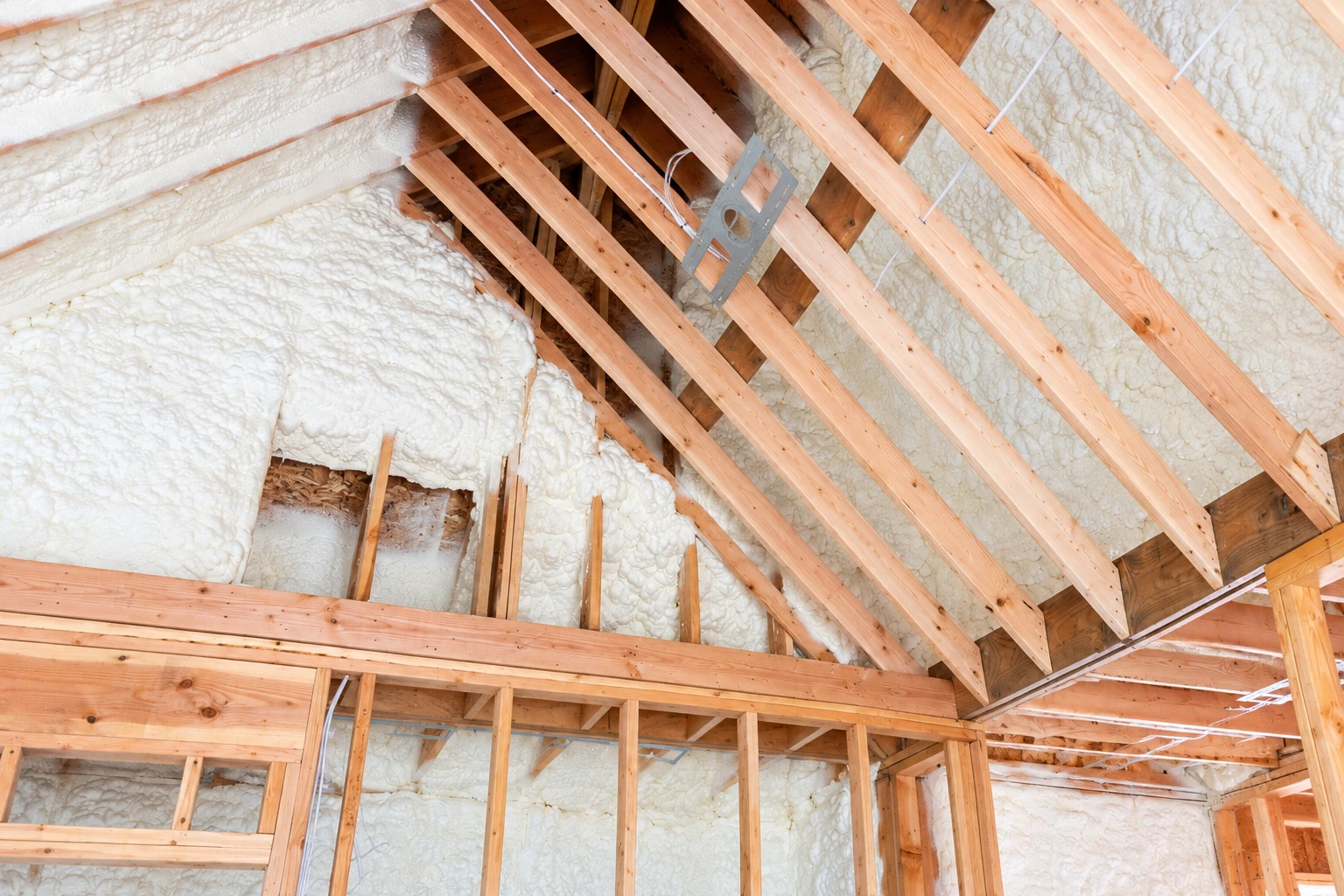
Open-cell foam insulation is a soft spray foam our crew applies to the underside of the roof or into open walls in Yakima, WA. It expands into every gap, so it seals air and insulates in the same coat, and the attic becomes part of the warm side of the house.
Most calls about it start with a furnace or ducts up in the attic, a room over the garage that never feels right, or a roof with so many angles it's hard to vent. The price moves with how many square feet of roof deck or wall we cover, how thick the foam goes, how easy the attic is to reach and whether old insulation has to come out first. The schedule mostly turns on getting any roof leaks fixed and getting everyone out of the house while the foam goes in. Once I've seen the job, the estimate puts your own figure on paper and lists what has to happen before we start.
How do you know if your attic is a good fit for spray foam?
Upstairs rooms run hot
When the bedrooms under the roof stay hot well into the evening, heat is usually soaking through the roof deck and attic air is leaking down into the house. Waiting means another summer of the air conditioner fighting it and a power bill to match.
Ducts in the attic
If your furnace or ductwork sits in the attic, it's working in a space that freezes in January and bakes in July, and every leaky joint spills air you paid to heat or cool. Left alone, the system runs longer and the rooms at the end of the line never quite catch up.
Stains or frost on roof boards
Dark stains or winter frost on the underside of the roof usually mean warm, damp house air is reaching the cold boards. That has to be sorted out before any foam goes in, and the longer it goes, the more likely the job starts with roof repair.
How we install open-cell foam insulation
I start in the attic with a flashlight on the roof boards, looking for stains, soft spots and daylight, because foam sprayed over a leak hides it until the damage is bad. Once the roof is sound, our crew clears out any old insulation that's wet or full of droppings, covers everything that shouldn't get foam on it, then sprays the foam in passes onto the underside of the roof deck or into the open wall framing and trims it flush. Open-cell is light and lets moisture pass through it, so when it goes under a roof, I sit down with you before we spray and plan how that attic will get rid of moisture once the old vents are closed off.
The same foam works in a building you rent out or run a business from, and we handle that as commercial insulation. A sealed attic also does better when the ground under the house isn't feeding damp air upward, which is why some owners pair this job with a crawl space vapor barrier.
Under the roof deck
This suits houses where the furnace or ducts live in the attic, because they end up sitting in air close to room temperature instead of attic extremes. It's also the usual route when you plan to finish the attic into living space.
Open walls during a remodel
When the studs are bare in an addition or a gutted room, open-cell fills around wires, pipes and boxes where batts leave gaps. It also takes some of the noise out of the room, which people notice in a bedroom over the garage.
Air sealing and loose fill instead
Foam costs more than other options, and if your attic has no ducts and is easy to get into, sealing the gaps and topping up the blown-in insulation usually gets you more for the money. When that's the better call, I'll tell you so.
Get a free estimate for open-cell foam
We'll get back to you within one business day to set a time. I come out myself, look at your attic or walls, and write up a free estimate with no pressure and no obligation.
- Based in
- Yakima, WA 98901
- Hours
- Mon–Fri: 8 AM–9 PM, Sat–Sun: 6 AM–9 PM
What happens after you call about open-cell foam in Yakima?
Here's how a foam job runs from your side, from the first call to the walkthrough, with the roof and moisture questions settled before anyone sprays.
Call or send the form
Tell us what's bothering you about the attic or walls, and we'll set a time for me to come out. If you know roughly how many square feet the attic covers and whether the roof has ever leaked, have that handy.
I inspect and write it up
I go through the attic and roof boards, explain what I see and draw it out if that helps. Your estimate lists the area, the foam thickness, any cleanout or prep, anything that has to be fixed first and how the attic will handle moisture.
Prep and sealing come first
Any roof repair you've lined up gets finished before spray day, and our crew handles the cleanout and prep before the foam. Plan for everyone, pets included, to be out of the house while it goes in, as the questions below explain.
Spray, cure and walkthrough
Our crew sprays and trims the foam while I'm on site checking the work as it goes. Once it's safe to come back in, I go over the finished attic with you before we leave.
Why Yakima homeowners call C&D Yakima Insulation Solutions for open-cell foam
The owner sees every attic
I come out myself to look at each job and write the estimate, and I'm back on site checking the crew's work as it goes. The person who told you what your roof needed is the one making sure it got done.
Framer first, insulating since 2017
I spent years framing houses before I started this business in 2017, so I read an attic as a structure before I think about foam. That's how a wet roof board or a sagging rafter gets caught before it's covered up.
Licensed and insured, easy to check
We're licensed and insured, and you don't have to take my word for it. Washington L&I has a contractor lookup that lets you check any contractor's registration and insurance before you sign, ours included.
The first step on any foam job is me standing in your attic, so reach us through our contact page or call (509) 517-6081.
Open-cell foam and the roof work around it in Yakima
Permits inside the city go through City of Yakima Codes, and I check with them on your job before we start rather than assume. If it needs a permit, we take care of the application with the city or county office that covers your address, and if I'm not sure yet, I'll tell you that up front and find out.
Yakima sits in the cold zone of Washington's energy code, which covers every city and county in the state, and that matters under a roof. In a cold climate the shingles act like a vapor barrier on the wrong side, the outside, so damp house air moving up through open-cell foam can meet a cold roof deck and condense. That's why the type and thickness of foam, and the moisture plan, get real thought before we spray here. We see the same cold winters and the same older roofs with stained boards on jobs in Selah and Ellensburg, and we handle them the same careful way.
Questions about spray foam in Yakima
Is open-cell spray foam a good choice for my attic in Yakima?
It's usually worth a look when your attic holds ductwork or a furnace, is going to become living space, or has a roof that's hard to vent or a ceiling that's hard to seal, which is when federal building guidance says to consider sealing the attic in. If none of those fit your house, I'll say so when I'm up there.
How much does open-cell spray foam insulation cost per square foot?
Across the US, open-cell spray foam usually costs about $1.50 to $3.50 per square foot, which is the going rate in the market and not our price. That covers the foam going in, so a roof leak to fix or old insulation to pull out adds to it, and my estimate puts your own figure on it.
How long do I have to stay out of the house after spray foam insulation?
Plan on at least 24 hours away, which is what federal consumer safety guidance tells residents to do when spray foam goes in. That wait is the re-entry time, when it's safe for the kids and pets to come back, so book a night somewhere else and we'll let you know when the house is ready.
How do I keep moisture from building up in an attic sealed with open-cell foam?
You plan a way to remove moisture from the attic as part of the job, because any sealed, unvented attic needs one. Open-cell foam is vapor open, so it lets moisture pass and can't be the layer that slows it, which is why the moisture plan is written into your estimate before the first pass.
Do I need to fix my roof before getting spray foam insulation?
Yes, if it leaks. Federal building guidance says to inspect the shingles or roof membrane first and fix any leaks and damage before foam goes under an existing roof. Roofing isn't our work, so if your roof has a history of leaks, line up the roofer ahead of us and we'll schedule around them.
What is the difference between open-cell and closed-cell spray foam?
Open-cell is the softer, lighter foam, rated around R-3.6 per inch for how well it slows heat, and it lets moisture pass through. Closed-cell foam is the dense kind that blocks moisture, so it tends to go where dampness is the bigger worry.
Related work that pairs with spray foam
Commercial insulation
Shops, warehouses and rental buildings around Yakima often have open framing or metal roofs where foam or other insulation cuts drafts and keeps tenants comfortable.
Crawl space vapor barrier
If the floors feel cold and the crawl space smells musty, a sealed sheet over the dirt stops damp before it reaches your insulation, wood or ductwork.
Cities we work in around Yakima
C&D Yakima Insulation Solutions is based in Yakima, WA, and our crew does foam work across the city and the cities around it, including Terrace Heights and Union Gap. The eight cities below have their own pages, and if yours isn't named, call and ask.
Book a look at your attic first
Foam is hard to take back out once it's on the roof boards, so it pays to settle the roof and moisture questions while they're still easy.