
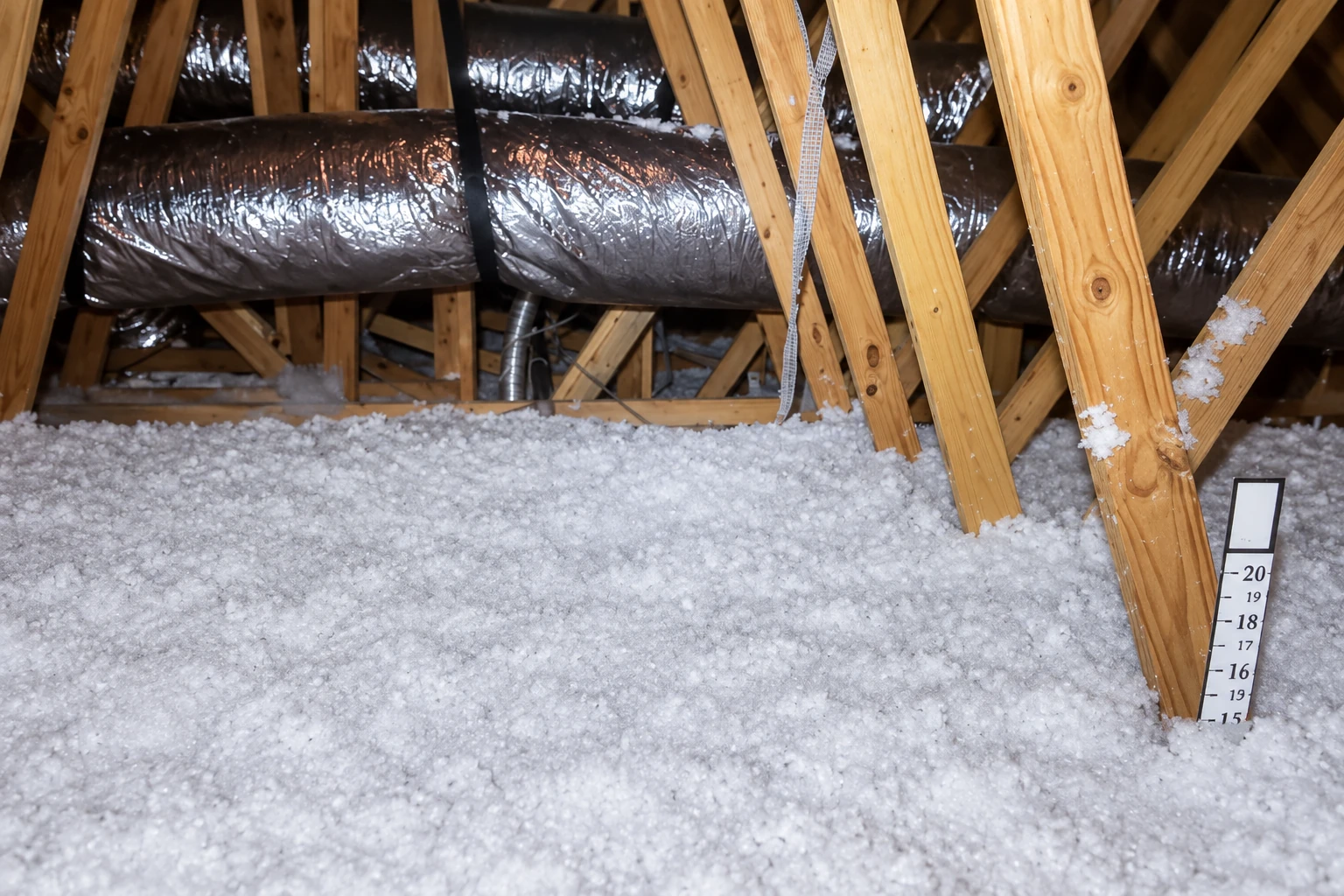
Blown-in insulation in Yakima WA - an even attic layer right out to the edges
Hot upstairs rooms or joists showing in the attic? We seal the gaps first, then blow in loose fill evenly to every wall.
- Licensed and insured.
- Free on-site estimates.
- Replies within 1 business day.
Is blown-in insulation right for your Yakima attic?
Blown-in insulation is loose fill, cellulose or fiberglass, blown through a hose onto your attic floor. In Yakima it's usually the most direct way to bring a thin or patchy attic up to a full, even layer, so the rooms under it stay steadier and your power bill isn't paying to heat the attic.
A lot of older houses went up with little or no insulation overhead, or with a layer that's packed down over the years, and that's usually why the upstairs runs hot and the hallway feels drafty. What moves the price is the size of the attic, how many inches are already up there, how much sealing and blocking it needs first and whether old material has to come out, and the schedule turns mostly on that same prep and any removal. Most of that prep is attic air sealing underneath the new layer, and I'll put your own figure in a written estimate once I've been up there and seen it.
How do you know your attic needs more insulation?
Joist tops showing through
If you can look in from the hatch and see the tops of the ceiling joists, the layer is thinner than the framing, so heat moves right through the wood and the gaps between. Every season it stays that way, you're paying the power bill to heat and cool the attic.
Upstairs never feels right
Bedrooms under the attic or the room over the garage that run hot in summer and cold in winter usually mean thin or uneven insulation overhead, often with air leaking through gaps around it. Waiting means the furnace and the air conditioner keep working harder than they should.
Old layer flat or stained
Insulation that's matted down, stained or full of droppings usually points to a roof leak or animals that got in at some point. Leave it, and the damp or the mess keeps working on the framing, which turns a simple job into a bigger one.
How we do a blown-in insulation job
Blown-in only works when it's spread evenly right out to the edges, because a pile that's deep in the middle and thin at the walls leaves the coldest spots uncovered. So before the blower starts, we check that the old material is dry and clean, then seal the openings in the attic floor around pipes, wires, lights and the hatch, so the new layer isn't fighting a draft. We set baffles, which are short chutes, at the eaves so the vents stay open and the fill can't spill into them, and we put metal blocking around hot flues and covers over can lights that aren't rated to be buried. Then the crew blows the attic to an even depth all the way out to the walls.
If the old layer is soaked or full of droppings, insulation removal comes first so the new fill sits on a clean floor. When the cold rooms trace back to more than the attic, home insulation looks at the whole house so you know where your money does the most good. And if your ductwork runs through the attic, spray foam can earn its higher price by sealing and insulating in one pass, but otherwise sealing the gaps and blowing in loose fill usually wins.
Blown fiberglass
Light fill that doesn't hold water in its fibers, which suits most attics and older ceilings that shouldn't carry extra weight. It's a good fit when you mainly need depth added over a sound layer.
Blown cellulose
Recycled paper treated against fire, packed denser than fiberglass so it settles tight around wiring and odd framing. It suits attics with a lot of obstacles where gaps tend to hide.
Topping up what's there
When the old insulation is dry, clean and just too thin, we seal the gaps and blow new fill right over it. That keeps the cost down, and it's the most common way this job goes.
Get a free estimate for blown-in attic insulation
Send the form and we'll get back to you within one business day to set a time. I'll come out, look at your attic and write up a free estimate, with no pressure and no obligation.
- Based in
- Yakima, WA 98901
- Hours
- Mon–Fri: 8 AM–9 PM, Sat–Sun: 6 AM–9 PM
What happens after you call us about blown-in insulation?
Here's how a blown-in job runs from your first call to the final walk-through, and who you'll be dealing with at each step.
Call or send the form
Tell us roughly how old the house is and what's bothering you, and we'll set a time for me to come out. If you're not sure how to describe the attic, that's fine, because I'll see it in person.
I look at your attic
I go up and check the depth already there, the vents, the gaps and anything that has to be fixed first, and I explain what I find. You get a written estimate that spells out the prep, the insulation and the price before anything is scheduled.
Our crew preps, then blows
The crew does the sealing, baffles and blocking first and the insulation after, so nothing gets buried before it's dealt with. I'm on site checking the work as it goes.
We walk the attic together
Before we leave, I go over the finished attic with you, from the eaves to the hatch. If something doesn't look right to you, that's the time to say so.
Why Yakima homeowners call C&D Yakima Insulation Solutions for blown-in
The owner writes your estimate
I'm based in Yakima and come out myself to see each attic and write the estimate, then I'm on site checking while our crew installs. You talk to the person who actually saw your attic, not someone pricing it off a phone call.
A framer's eye since 2017
I framed houses for years before I switched to insulation and started this business in 2017, nine years ago now. Knowing how a roof and ceiling go together is how I spot the leaks, damp spots and old wiring that have to be fixed before anything new goes in.
Licensed and insured for attic work
We're licensed and insured. That matters when a crew is working above your ceilings with a blower and a hose for the day.
When you're ready, get in touch and I'll set a time to come look at your attic.
Blown-in insulation and attic prep around Yakima
Whether a blown-in attic job needs a permit isn't something I'll guess at for you. The City of Yakima's codes office takes permit applications, and if your job needs one, we take care of the application with the city or county office that covers your address. If we're not sure yet, we tell you that up front and find out.
Washington's energy code allows open-blown loose fill on attic ceilings with a slope of no more than 3 in 12, and the attic needs at least 30 inches of clear space from the ceiling joists up to the roof deck at the ridge. So at every estimate I check the pitch and that height, because an attic that doesn't meet them needs a different approach, and I'd rather tell you that before you've spent anything. Most of the older houses we get into here have attics with plenty of room and not much insulation in them, and we see the same kind of houses on jobs in Selah and Union Gap.
Questions about blown-in insulation in Yakima
How much does blown-in attic insulation cost in Yakima?
Installed attic insulation across the US usually costs about $1 to $3 per square foot, which is the national market range and not our price. Where your attic lands depends mostly on the prep it needs and whether old insulation has to come out, and I'll write your figure up after I've seen it.
Is blown-in insulation cheaper than batts in an attic?
Usually, yes. Blowing loose fill into an attic generally costs less than laying batts and covers better, because it settles around wires, bracing and odd framing instead of leaving gaps at the edges of each piece. Costs still vary from attic to attic, so the estimate is where you'll see it for yours.
What should I do if my attic has pebble-like insulation?
Leave it alone and don't stir it up. The EPA describes vermiculite as a pebble-like pour-in insulation, usually gray-brown or silver-gold, and advises treating it as if it contained asbestos and using a trained professional if it needs to come out. We won't blow new insulation over it, and I'll tell you plainly when that work has to happen before ours.
How do I check an insulation contractor's license in Washington?
Use the Washington Department of Labor & Industries' Verify tools, which let you confirm a contractor is registered and has a valid bond and insurance. Check anyone before you sign, us included.
How long does blown-in attic insulation take, and do we have to leave the house?
Most of the time goes into the sealing, baffles and blocking, and the blowing itself is the quicker part, so the length of the job depends on your attic and what I find up there. Loose fill doesn't have the wait before you go back in that spray foam does, so families usually stay home, though we'll ask you to keep kids and pets away from the hatch and the hose while we work.
Can new blown-in insulation go over the old insulation in my attic?
Often, yes, as long as the old layer is dry and clean. If it's been soaked by a roof leak or is full of droppings, new fill on top just buries the problem, so that layer comes out first.
Related services for your attic and house
Home insulation
When cold floors, drafty rooms and a high power bill point to more than the attic, a whole-house look shows you where your money does the most good.
Insulation removal
If the old layer is wet, matted or full of droppings, taking it out first gives the new insulation a clean, dry attic floor to sit on.
Cities where we do blown-in insulation
C&D Yakima Insulation Solutions is based in Yakima, Washington, and the eight cities below each have their own page here, from Terrace Heights to Ellensburg. We work in the cities around them too, so if yours isn't listed, call and ask.
Book a look at your attic insulation
Call (509) 517-6081 or send the form with your home's age, the attic's rough size and a note on any pebble-like insulation you've seen without touching it, so I know what to look for before I come out.