
Basement insulation in Yakima WA - warm walls on a dry, sound foundation
Cold floors and a chilly, damp basement? We check the walls for water first, then insulate so the space and rooms above stay warmer.
- Licensed and insured.
- Free on-site estimates.
- Replies within 1 business day.
What does insulating a basement in Yakima involve?
Basement insulation in Yakima usually means insulating the foundation walls. That brings the basement inside the heated and cooled part of your house, and a warmer basement in winter often means warmer floors in the rooms above it.
Most people call because the floor over the basement is cold, or because they want to finish the space and know the walls need something first. The price moves with how much wall there is, whether it's bare concrete or already framed, which material goes on it, and whether anything has to be fixed before we start. The schedule mostly turns on that last part, because a wall taking on water or a crack that needs repair comes ahead of the insulation. It also depends on whether your job needs a permit. You'll get your own figure from the estimate I write after I've been down there and seen the walls.
How can you tell your basement needs insulation, or a fix first?
Cold floors upstairs
If the floors over the basement feel cold in winter, the foundation walls are usually bare concrete letting your heat out. Every month it waits, you're paying to heat a space that keeps losing it.
Damp spots or musty smell
Dark patches, a white chalky crust on the concrete or a musty smell usually mean water is getting through the wall. Insulation put over that traps the water, so have it looked at before anything goes up.
Cracks in the walls
A hairline crack is often just the concrete settling, but a wide crack, a stair-step crack in block or a wall leaning in can point to a foundation problem. Once insulation covers it, nobody can see it change, so it gets looked at first.
How we do basement insulation
Before I price any insulation, I check the basement walls for water and foundation trouble. A wet or cracked wall comes first, and I'll tell you about it rather than quote around it. Once the walls are ready, our crew does the air sealing, which means closing the gaps where the floor framing sits on the concrete and where pipes and wires come through, so the new insulation isn't fighting a draft. Then the insulation goes on the walls, either foam sprayed onto the concrete or foam board with a framed wall in front of it, and we clean up before we walk you through it.
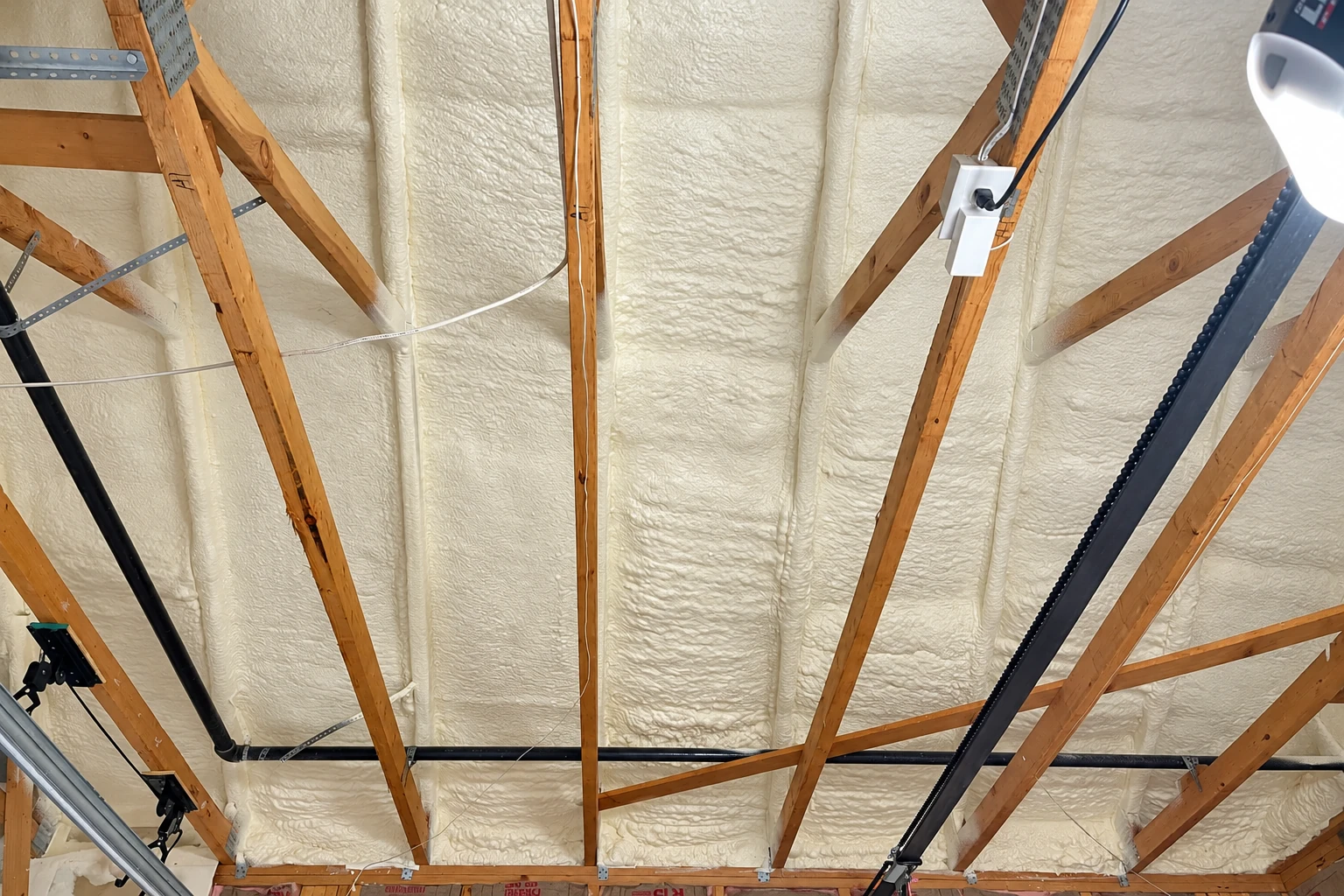
Choosing the foam is the main decision on most basement jobs. Closed-cell foam insulation is dense, blocks moisture and seals air as it insulates. It costs more, but it's the one I usually recommend against bare concrete. Open-cell foam insulation is softer and cheaper, but it lets moisture through, so we use it in framed walls and in the ceiling over the basement rather than right against the foundation.
Closed-cell foam on the concrete
This suits a basement you want to finish or keep warm, because one layer insulates, stops air and holds back moisture right at the wall. It usually costs the most of the three.
Foam board with a framed wall
This suits a basement being finished. Rigid foam boards go against the concrete, and a stud wall in front of them holds the wiring and the drywall. It usually costs less than spraying the whole wall.
Insulating the ceiling instead
This suits a basement you don't plan to use, because insulation between the floor joists keeps heat in the rooms above for less money. I only suggest it when the furnace, ducts and water lines aren't down there, because the basement stays cold.
A written basement insulation estimate after I've seen your walls
Send the form and we'll get back to you within one business day. I'll come out, check the walls for water and cracks and write up a free estimate, with no obligation to go ahead.
- Based in
- Yakima, WA 98901
- Hours
- Mon–Fri: 8 AM–9 PM, Sat–Sun: 6 AM–9 PM
What happens after you call about basement insulation?
From your first call to the walk-through, here's who you'll deal with at each step and what you'll have in hand before any work starts.
Call us or send the form
Call (509) 517-6081 or use the form and tell us what's going on, whether it's cold floors upstairs or plans to finish the space. We'll set a time for me to come out.
I come out and check
I check the concrete for water, cracks and old wiring, explain what I see and write up the estimate. It shows which wall approach fits your house and what has to be fixed first, so you know the cost before anything starts.
Prep and sealing, then insulation
Once any permit your job needs is in place, our crew does the prep and air sealing first and the insulation after. I'm on site checking the work as it goes.
We go over it together
Before we leave, I walk the finished walls with you and show you what went where. If something doesn't look right to you, that's the time to say so.
Why Yakima homeowners call C&D Yakima Insulation Solutions about basements
I look at every basement myself
I come out to see the walls and write the estimate, and once the crew starts I'm on site checking the work as it goes. When you have a question about the job, you're talking to the person who priced it.
In business since 2017
I spent years framing houses before I started this business in 2017, so I look at a foundation and the wall above it the way a builder does. That helps with the real question on most basement jobs, which is whether the walls are ready yet.
Licensed and insured in Washington
Washington requires construction contractors, including those who remodel and repair, to register with L&I, the state labor department. We're licensed and insured, and you can look up any contractor before you hire, as the FAQ below explains.
Tell us about your basement or call (509) 517-6081, and I'll set a time to come look at the walls.
Basement insulation, permits and wall rules in Yakima
If you're finishing the basement, the City of Yakima handles building permits for remodels. The application goes in with construction plans that show the floor plan as it is now and as it will be, the wall details and the state energy code worksheets when they apply. I won't guess whether your job needs a permit. If it does, we take care of the application with the city or county office that covers your address, and if we're not sure, we tell you up front and find out. Washington's energy code allows an unbroken layer of insulation on the inside or outside of the foundation wall. It also allows a framed wall with a thermal break, a layer that stops heat, between the floor slab and the wall. The estimate shows which one fits your house. If the finish includes electrical work, the city sends owners to the state Department of Labor and Industries at (509) 454-3760 for that permit.
Many of the basements we see are older concrete walls that were partly finished years ago, with batts behind paneling or plastic, so part of my look is what's behind the old finish. We find the same mix on jobs in Selah and Union Gap. We work across Yakima and the cities around it, so if yours isn't named here, call and ask.
Questions about basement insulation in Yakima
How much does basement insulation cost in Yakima?
Basement insulation across the US usually costs about $1,500 to $6,500 per job. That's the national range, not our price. Where your basement lands depends mainly on the amount of wall, the material and any repairs that come first. Your own figure comes from the estimate I write after I've seen the basement.
How do I know if my basement is dry enough to insulate?
Check the walls for water coming in, and get it stopped before any insulation goes up. Finishing a basement over a moisture problem can make health problems worse and cause real damage to the house. That's why I look for damp patches, crust and musty smells first and tell you what I find.
Should I insulate a basement with cracked foundation walls?
Not until the cracks have been looked at, because insulating a foundation with structural problems can hide them and in some cases make them worse. Any repair goes ahead of the insulation, in the plan and in the budget, and I'll tell you if I think a wall needs one before I price anything.
Can plastic sheeting go over fiberglass on basement walls?
Usually not. Building guidance keeps plastic sheeting and foil-faced sheathing off the room side of basement fiberglass because they can trap moisture inside the wall. Kraft-faced fiberglass batts or latex paint on the drywall do that job instead, so ask every contractor who quotes your basement what they plan to use.
Does spray foam in a basement have to be covered?
Yes. Federal installer guidance says foam on basement walls needs a drywall covering to meet building code, because the drywall shields the foam from fire. Plan on that covering whether you finish the room now or later.
How do I check if a contractor is registered in Washington?
Look the company up in L&I's Verify a Contractor, Tradesperson, or Business tool, which lists registered Washington contractors. It's worth doing for anyone you're thinking of hiring, us included.
Foam options that pair with basement work
Closed-cell foam insulation
Dense foam sprayed straight onto concrete that insulates, stops air and holds back moisture in one layer, which is why it suits so many basement walls.
Open-cell foam insulation
A softer, lower-cost foam that fills framed cavities and quiets noise between floors, a good fit when the basement ceiling or interior walls need attention too.
Service areas we cover from Yakima
C&D Yakima Insulation Solutions is based in Yakima, WA, and we insulate basements across the city and the cities around it, from Terrace Heights to Ellensburg. The 8 areas below have their own pages, and if your city isn't listed, call and ask.
Have me look at your basement walls
When you call or send the form, have the basement's rough size, any signs of water you've seen and your plans for finishing it ready, because those shape what I check first.