
Home insulation in Yakima, WA - rooms that stay comfortable in every season
Hot upstairs in July, cold floors in January, a power bill that keeps climbing? We seal the leaks, then insulate where it counts.
- Licensed and insured.
- Free on-site estimates.
- Replies within 1 business day.
Where should I insulate my Yakima house first?
Home insulation in Yakima means adding insulation to your attic, floors, crawl space and the rim joists along the top of the foundation, and sealing the air leaks around the house first, so the heat you pay for stays in the rooms you live in.
Most people call about one room, the hot bedroom upstairs or the cold one over the garage, and the fix often sits somewhere else in the house. The price moves with how many areas need work, how easy the attic and crawl space are to get into, whether old insulation has to come out first and how much sealing the house needs. The schedule turns mostly on what has to happen before any insulation goes in, like a roof leak, a damp crawl space or old wiring that someone has to deal with, and on whether there's old pour-in fill that has to be looked at before anyone disturbs it. Once I've seen your house, your own figure and the order of the work go on the estimate.
How can you tell your house needs more insulation?
Hot rooms upstairs
If the upstairs bedrooms stay hot long after the sun goes down, heat is usually soaking down through a thin or patchy attic. Left alone, the AC runs longer every summer and those rooms still don't cool off.
Cold floors and drafts
Cold floors usually point to a crawl space with little or nothing under the subfloor, and a draft means air is getting in somewhere it shouldn't. The longer it goes, the more you pay to heat air that leaks right back out.
Flat, stained or thin insulation
When you can see the tops of the ceiling joists, or the old fill is flattened, stained or full of droppings, it isn't doing much work. Stains and droppings can also mean a leak or pests that keep spreading until someone finds them.
How we handle home insulation, from the attic down
I start by walking the whole house with you, attic, floors and crawl space, and pointing out where your money will do the most, because that's often not the spot with the most insulation missing. If there's a leak, a damp spot or old wiring, that gets handled before we insulate, since new material over a problem just hides it. Then our crew does the air sealing, closing the gaps around can lights, pipes, wires and the attic hatch, because insulation can't stop air that's blowing right past it. Federal attic guidance says only IC-rated recessed lights, the airtight kind made to be buried, should be covered, so I check which ones you have before anything goes on top. The insulation itself comes last.
Some houses need work around the insulation before the insulation itself. If the old fill is soaked, moldy or full of droppings, our insulation removal work clears it out first so the problem doesn't stay under the new layer. If the cold is coming up through the floors, crawl space insulation is usually the part of the job you'll feel the most.
Air sealing and a loose-fill top-up
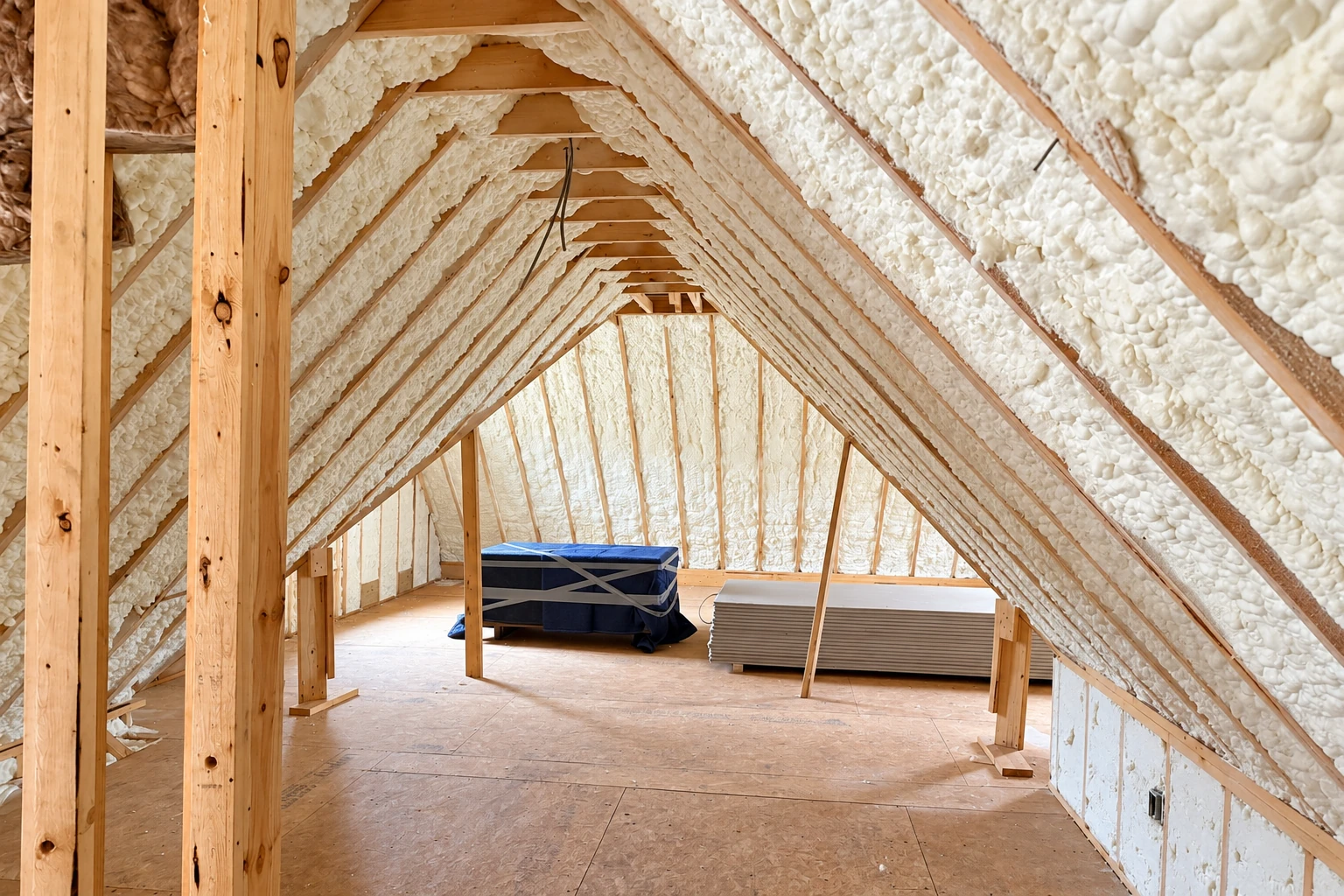
This suits most attics with room to work and no ducts running through them, because sealing the gaps and then adding blown-in insulation, loose fill blown through a hose, over what's already there usually gets you the most comfort for the money. It's what I recommend for most houses.
Spray foam where the ducts run
If your ductwork lives in the attic, foam can be worth its higher price because it seals the air and insulates in one step, around the ducts as well as the house. It costs more, so I only suggest it when the layout calls for it.
Get a free estimate for insulating your Yakima house
We get back to you within one business day to set a time. I come out, look at the attic, floors and crawl space, and write up a free estimate, with no obligation to go ahead.
- Based in
- Yakima, WA 98901
- Hours
- Mon–Fri: 8 AM–9 PM, Sat–Sun: 6 AM–9 PM
What happens after you call us about insulating your house?
From the first call to the last look at the finished attic, here's how a home insulation job runs with us and who you'll be dealing with.
Call or send the form
Tell us which rooms bother you and anything you know about the attic or crawl space. We get back to you and set a time for me to come out.
I walk the house with you
I look at the attic, crawl space and walls, explain what I see and draw it out on the back of the estimate if that helps. If something isn't ready, like a damp crawl space, I tell you before you spend a dollar on insulation.
We seal, then insulate
Our crew handles the prep and sealing first and the insulation after, so nothing covers a gap that should have been closed. I'm on site checking the work as it goes.
We go over it together
When the crew is done, I walk you through the finished work, up the ladder if you want to see it. We clean up before we leave.
Why Yakima homeowners call C&D Yakima Insulation Solutions
I come out to every job
I look at each house myself and write the estimate, then stay on site checking the crew's work as it goes. The person who told you what the job needs is the one making sure it gets done that way.
Framing carpenter turned insulator
I framed houses for years before I started this business in 2017, so I read an attic as part of how the whole house goes together. That's how I catch the leak or damp spot that has to be fixed before insulation is worth buying.
Licensed and insured in Washington
Washington requires every construction contractor to register with the state Department of Labor and Industries and carry insurance. We're licensed and insured, which is the first thing worth knowing about anyone you let into your attic.
When you're ready, send us the form or call (509) 517-6081 with the rooms that bother you and whether you've seen loose, pebble-like fill in the attic, and I'll plan the walk-through around it.
Insulation, sealing and crawl spaces in Yakima homes
Yakima summers run hot and dry and the winters get cold, so an attic here has to keep heat out in July and hold it in through January, and a thin spot shows up both ways. In a lot of older attics we find the insulation piled deep in the middle and thin at the edges, which is backward, and sometimes the vents at the eaves are buried under it so the attic can't breathe and moisture starts showing in the framing. We pull it back from the eaves, keep those vents clear and bring the edges up to match the middle.
Many older homes sit over a crawl space with little between it and the floor, which is where cold kitchens and bathrooms usually come from. We see the same thing on jobs in Selah and Union Gap, and when the floors are the complaint, that's where we start.
Questions about home insulation in Yakima
How much does it cost to insulate a house in Yakima?
Most of the price comes from how many areas need work and what has to happen before insulation goes in. Attic size and access, whether old material has to come out, how much air sealing the house needs and whether you choose loose fill or foam all raise or lower it. Your estimate gives your own figure after I've walked the house.
Will new insulation lower my power bill in Yakima?
Usually yes, especially when the insulation goes in along with air sealing. Federal energy guidance puts the average savings from the two together at up to 15% on heating and cooling, or up to 11% on total energy costs. How much you see depends on how many inches are up there now and how leaky the house is, which is what I look at on the walk-through.
Is blown-in or batt insulation better for my attic?
For most attics, blown-in loose fill is the better choice, because it usually costs less to install than batts and gives better coverage. Fiberglass, rock wool and cellulose can all be blown in. Installation prices vary, so it's fair to ask for both methods when you compare attic quotes.
How do I know if my attic has vermiculite insulation?
Look for loose, pebble-like fill that's usually gray-brown or silver-gold, and look without digging into it or moving it around. The EPA's advice is to leave vermiculite undisturbed, because disturbing it can release asbestos fibers into the air, and if you decide to remove it, that job belongs to a trained, accredited asbestos abatement contractor separate from whoever assessed it. Ask whether that contractor holds the asbestos certification Washington requires for the work, and tell us about the fill when you call so nobody stirs it up during the visit.
Do I have to leave my house while you insulate?
For air sealing and blown-in loose fill, you can usually stay home and go about your day. Spray foam is different, because it comes with a re-entry time, the wait before people and pets can come back inside, and I go over that with you before any foam goes in.
How do I get weatherization help in Yakima County?
You go through the local agency for your part of the county. North of Union Gap, that's OIC of Washington at 509-452-7145, and south of Union Gap it's Yakima Valley Farm Workers at 509-865-7630. The program is open to homeowners and renters with household income up to 200% of the federal poverty level, 60% of the state median income or 80% of the area median income, and the agency decides whether your household qualifies.
Insulation work that often goes with this job
Insulation removal
When the old insulation in your attic is wet, matted or full of rodent droppings, clearing it out gives the new layer a clean start.
Crawl space insulation
If your floors feel cold underfoot all winter, insulating the crawl space under them is often where the comfort you can actually feel comes from.
Cities we work in around Yakima
C&D Yakima Insulation Solutions is based in Yakima, WA, and we insulate houses across the city and in the cities around it, including Terrace Heights and Ellensburg. The eight cities below each have their own page, and if yours isn't listed, call and ask.
Book a whole-house insulation walk-through
Call (509) 517-6081 or send the form with the rooms that bother you, so I know where to look first when I walk your house.